
Why Understanding the Kitchen Remodel Process Matters
A kitchen remodel is one of the most impactful investments you can make in your San Diego home. It can boost your property value, improve daily functionality, and completely transform how your family uses the heart of the house. But if you've never been through a major renovation before, the process can feel like a black box. What happens after you sign the contract? How long will you be without a functioning kitchen? When do you need to make decisions about tile, countertops, and cabinet hardware?
At Mountain View Extensions, we walk our clients through every step before work begins. Whether you're in Coronado, La Mesa, or right here in the Hillcrest neighborhood near our office on University Avenue, we believe informed homeowners make happier homeowners. Here's a detailed look at what to expect at every stage of a kitchen remodel.
Stage 1: Design and Planning
Every great kitchen starts on paper—or more accurately, on screen. During the design phase, you'll work with your remodeling team to establish the layout, select materials, and set a realistic budget. This is the stage where big decisions happen:
- Layout changes: Are you moving the sink, relocating the stove, or opening up a wall to create an open-concept floor plan?
- Material selections: Countertops, cabinetry, backsplash tile, flooring, fixtures, and appliances all need to be chosen before construction begins.
- Budget alignment: A good contractor will help you understand where to invest and where to save without sacrificing quality.
In San Diego, this is also the time to discuss any permit requirements with your contractor. Depending on the scope of work—especially if you're moving plumbing or electrical—you may need permits from the City of San Diego's Development Services Department. Your remodeling company should handle this process for you.
The design phase typically takes two to four weeks, depending on the complexity of your project and how quickly you finalize your selections.
Stage 2: Pre-Construction Preparation
Once your design is locked in and permits are secured, it's time to prepare for construction. This is a short but important phase that sets the tone for the rest of the project.
- Set up a temporary kitchen: You'll want a microwave, a coffee maker, a small refrigerator, and some disposable plates and utensils in another room. Many of our clients in Chula Vista and El Cajon set up in their garage or dining room.
- Protect your home: Your contractor should install dust barriers, floor protection, and clear pathways to minimize disruption to the rest of your living space.
- Material delivery: Cabinets, countertop slabs, tile, and appliances are ordered and scheduled for delivery at the right time during the build.
This stage usually takes about one week and overlaps with the final days of the permitting process.
Stage 3: Demolition
This is the part that feels the most dramatic. Your old kitchen comes out—cabinets, countertops, flooring, and sometimes walls. Demolition is loud, dusty, and exciting. It's the moment your remodel becomes real.
A professional crew will handle debris removal and keep the job site as clean as possible. If your remodel involves structural changes, like removing a load-bearing wall to open up the kitchen to a living area, a structural engineer's plan will guide the work. Demolition typically takes two to five days for a standard kitchen remodel.
Stage 4: Rough-In Work
With the old kitchen stripped down to the studs, the behind-the-scenes work begins. This phase includes:
- Electrical: New wiring for outlets, under-cabinet lighting, pendant lights, and appliance circuits.
- Plumbing: Relocating or updating water supply lines and drain lines for the sink, dishwasher, and refrigerator.
- HVAC adjustments: If your new layout requires changes to ductwork or ventilation.
After the rough-in work is complete, a city inspector will visit to verify everything meets code. San Diego's inspection process is generally efficient, but your contractor should build a buffer into the schedule for any required corrections. This phase typically lasts one to two weeks.
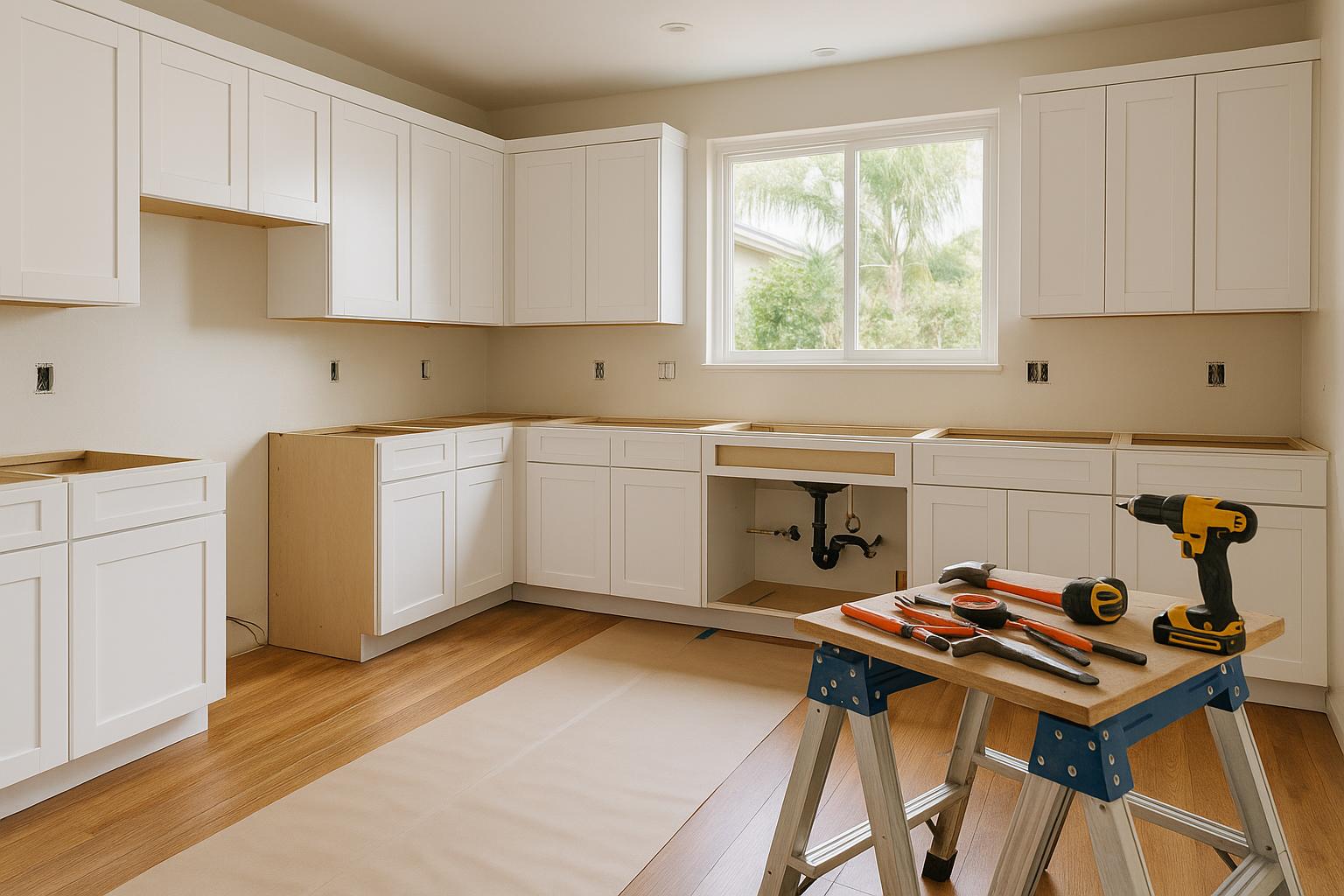
Stage 5: Installation
Now the fun begins. This is the longest phase, but it's also the most visually rewarding because you'll see your new kitchen come together piece by piece.
- Drywall and patching: Any walls that were opened up or modified are finished and primed.
- Cabinet installation: Your new cabinets go in, establishing the overall look and feel of the space.
- Countertop fabrication and installation: After cabinets are set, countertops are templated, fabricated, and installed. This step alone can take one to two weeks due to fabrication time.
- Backsplash and tile work: Tile is installed and grouted, adding texture and personality to your kitchen.
- Flooring: Whether you've chosen luxury vinyl plank, hardwood, or porcelain tile, flooring goes in once the heavy overhead work is done.
- Fixtures and appliances: Faucets, light fixtures, outlets, switches, and appliances are installed and connected.
The installation phase generally takes three to five weeks for a full kitchen remodel. Timelines can vary based on material lead times, custom orders, and the size of your kitchen.
Stage 6: Final Details and Walkthrough
The last stage is all about perfection. Your contractor will handle punch-list items—those small details like adjusting cabinet doors, caulking edges, touching up paint, and making sure every drawer glides smoothly.
At Mountain View Extensions, we schedule a final walkthrough with every client. We go through the kitchen together, test every fixture and appliance, and make sure you're completely satisfied before we consider the project complete. We also provide guidance on caring for your new countertops, maintaining your cabinetry finish, and getting the most out of your new appliances.
How Long Does a Kitchen Remodel Take in San Diego?
From design to final walkthrough, most kitchen remodels in the San Diego area take eight to fourteen weeks. Smaller updates—like replacing countertops and refinishing cabinets—can be done in as little as four weeks. Larger projects that involve structural changes, custom cabinetry, or high-end finishes may extend to sixteen weeks or more.
Factors that can affect your timeline include:
- Permit processing times with the City of San Diego or surrounding municipalities like National City or La Mesa
- Lead times for custom or specialty materials
- Discovery of hidden issues like water damage, outdated wiring, or asbestos in older homes
- Weather delays for any exterior work tied to the remodel
Ready to Start Your Kitchen Remodel?
If you've been thinking about transforming your kitchen, the best first step is a conversation. At Mountain View Extensions, we help homeowners across San Diego, El Cajon, Coronado, and the surrounding communities turn outdated kitchens into spaces they love. We'll walk you through every stage, keep you informed along the way, and deliver craftsmanship you can see and feel for years to come.
Reach out to our team to schedule a consultation and get a clear picture of what your kitchen remodel will look like from start to finish.